
Smyrna Previous Residents by Era
One address has several timelines. The current parcel record supplies the most practical opening, but it is not a household list. Recorded deeds trace ownership, while archives preserve the longer tax and newspaper trails. The table keeps the known coverage limits visible, including gaps that should not be filled with guesses.
| Source | Years It Covers | Where Held | What It Shows |
|---|---|---|---|
| Rutherford property assessor | Current data; historic online start not located | County property search | Parcel, owner, situs and mailing clues |
| Register of Deeds | Online grantor-grantee cutoff not located | Register counter and title-search route | Recorded transfers, parties and legal descriptions |
| Rutherford tax records | 1877-2012 | Rutherford Archives | Taxpayer and land continuity clues |
| Daily News Journal | 1931-1992 | Archives and Historical Research Center | Obituaries, notices, road and address references |
| FamilySearch deed abstracts | 166-page abstract; deed-year span not stated | FamilySearch and affiliate-library access | Older transfer names and legal descriptions |
| Smyrna permits and certificates | Current categories visible; older cutoff not located | Town Building Safety Document Center | Structure changes and project-participant clues |
For a recent transfer, begin with the parcel and recorded instrument. For an older house, work from tax entries and deed abstracts, then use newspaper or probate evidence to test the people connected to the place. A missing date range is a reason to ask the custodian, not a reason to assume the record does not exist.
Start With a Smyrna Parcel
The Rutherford County advanced property search accepts owner, street, parcel, value, sale, building, and book or page filters. The county advises using at least three characters; owner searches use a last-name-first convention without a comma, and a street search can begin with the street name. Save the parcel number, situs address, mailing address, legal description, and any book or page reference as separate notes.
The assessor view is a starting point for Smyrna previous residents research because a mailing address may differ from the property location. It also reflects current assessment information, not a verified history of everyone who occupied the address. Compare the parcel with Rutherford County GIS before carrying the name into deed records.
The advanced-search screen shows the available property filters.
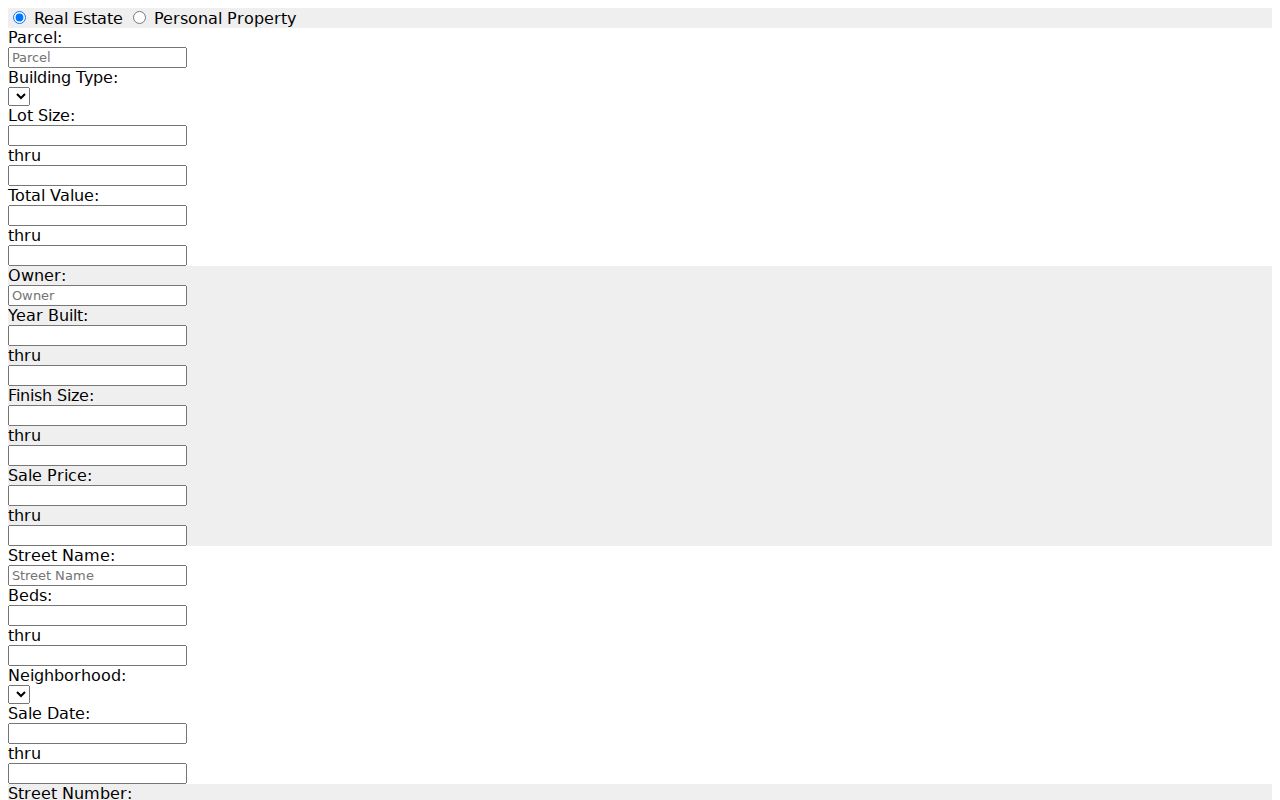
Those fields provide a practical bridge from a street address to a parcel and recorded reference.
Trace Smyrna Previous Residents Through Deeds
The Rutherford County Register of Deeds keeps recorded deeds, deeds of trust, plats, restrictions, liens, and other land instruments. A deed trail follows ownership, so it may not identify every past resident. Still, the parties, derivation clause, legal description, map or parcel reference, and recording placement make it the strongest backward spine for one address.
- Open the assessor result and record the current owner, parcel, legal description, and any book or page citation.
- Use the owner as the grantee, or buyer, in the deed trail to locate that owner’s purchase instrument.
- Write down the seller named in that instrument, then search that seller as a grantee to find the earlier purchase.
- Repeat the buyer-to-seller reversal, comparing the legal description each time so that similarly named parcels do not get mixed together.
- When the online route no longer answers the question, take the names, year, book, page, and legal description to the Register, archival deed books, or state microfilm.
- Grantor / grantee
- The grantor transfers an interest in property. The grantee receives it.
- Chain of title
- A dated sequence of recorded transfers for the same parcel or legal description.
- Legal description
- The lot, block, subdivision, or metes-and-bounds wording used in land records. It is more durable than a street address when names or numbers change.
The county’s title-search instructions describe a TVA map-box, book, and page route rather than an address search.
That routing explains why the parcel and legal description should travel with every name in the chain.
Smyrna Deed Search Limits
Rutherford County’s official pages do not state the first year of a public online grantor-grantee index, its exact document filters, image price, or a reliable online cutoff. Do not assign a year to that gap. The Register warns that staff do not provide guaranteed title opinions, so a title company or licensed professional is the proper source for a legal conclusion about ownership.
For historical work, move from the official title-search route to the counter, archive, and microfilm channels. Tennessee deeds are arranged by grantor and grantee rather than street address, which makes the legal-description bridge essential. The Register’s office information provides the official access point and its recording context.
The Register of Deeds page identifies the office that maintains recorded land instruments.
Use that official route for record access, while keeping the unresolved online date boundary in the research notes.
Note: A recorded transfer can document a property interest without proving that either party lived at the address.
Older Smyrna Deed Abstracts
A 166-page Rutherford County deed abstract on FamilySearch can add older transfer names and legal-description clues when a name trail reaches beyond the convenient county route. The accessible source does not state a complete deed-year span, so treat it as an abstracted aid rather than a complete substitute for the recorded books.
FamilySearch image access can depend on a free account or an affiliate-library terminal. The Historical Research Center in Murfreesboro offers FamilySearch Affiliate Library access, local-history books, microfilm, scanners, and genealogy resources. Bring the legal description and the spellings already found; abstracts are most useful when they can be checked against the property trail.
Smyrna Tax and Newspaper Trails
Rutherford Archives holdings include tax records from 1877 through 2012 and the Daily News Journal on bound volumes or microfilm from 1931 through 1992. Tax material can place a taxpayer with land or property over successive years. Newspaper notices can add an obituary, anniversary notice, civic mention, business reference, or road name that helps explain a transition not visible in a parcel portal.
Neither source is an address-indexed promise. Ask the archivist for the series and years that fit the property, then compare names with deeds and probate. The Historical Research Center listing identifies the local-history setting and its research resources.
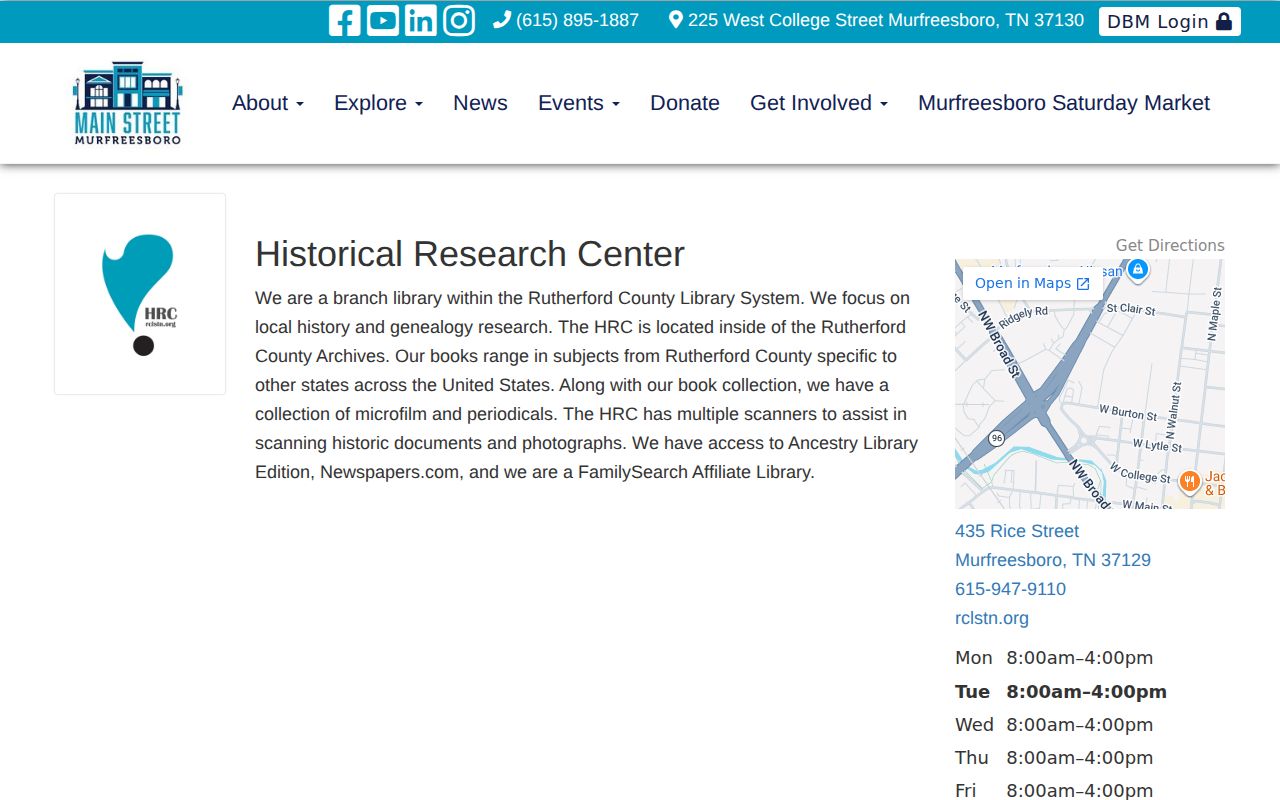
The center is a useful in-person stop when an online parcel result has reached its historical limit.
Smyrna Directory Gaps
Verified nearby Murfreesboro city-directory bibliography years are 1925, 1950, and 1956. The publisher was not located in the accessible bibliography. No dedicated Smyrna city-directory run, publisher, or continuous reverse directory was found in official or local authoritative sources. That absence matters because an address-to-occupant search cannot be assumed for Smyrna.
Ask the Historical Research Center, Rutherford County Library System, or state archives whether a shelf, Walkup file, Courier issue, or nearby county-seat directory fits the date. Use the dates as checkpoints, not as coverage for every year. The Smyrna directory book collects the known historical collection details without inventing a missing local run.
Smyrna Permits Date Changes
Smyrna Building Safety issues permits and certificates of occupancy, and its Document Center reports organize permit material by year. A report can carry an address, project type, owner or applicant, contractor, issue date, and certificate information. It can help date construction, demolition, an addition, or an alteration.
The reports page showed current categories but did not establish a full older cutoff. Record each name as a project participant or record contact, then test it with the deed chain and archival sources. A permit gives the structure a date clue, not proof of who lived there.
Heirs in Smyrna Property History
Probate and obituary research can close a difficult property trail. Rutherford Archives holds will indexes for 1804-1899 and 1900-1947, while FamilySearch lists Tennessee probate books for 1795-1927. Those records may name heirs, witnesses, property, residences, and dates. A deceased owner’s estate can explain why a property changed hands even when a newspaper gives only a family name.
For later matters, the Rutherford County Clerk is the county route for estate and will information, subject to sealed material. Compare an heir relationship with a deed, obituary, or vital record before treating it as settled. This is useful family and house history work, especially where a transfer skips an expected buyer-seller pattern.
Smyrna Maps and Changed Addresses
The 1878 D. G. Beers Rutherford County map includes a Smyrna inset, roads, railroads, tract lines, tract numbers, and named landowners. It predates modern parcel numbers and street assumptions, so it is a place-and-surname bridge rather than a resident list. Compare a deed surname with the tract context, then work forward through abstracts, tax records, and later property descriptions.
Address continuity also deserves a check. February 2025 Smyrna Planning minutes discussed a development-specific proposal to rename part of Williamsport Drive and change each house number on that portion, subject to E911 approval. Search the former and proposed names, then confirm the match with Planning and GIS, plats, and the address-authority fields. It was not a townwide renumbering.
Respectful Smyrna House History
Past residents research is most useful for house history, family history, and estate or heir questions. Dates, names, and parcel data should be cross-checked because each record has its own purpose and timing. A name in a deed, tax roll, permit, or notice is a lead to verify, not permission to contact someone.
Lawful use. Use Smyrna previous residents records for personal and family history, and never use a record to stalk, harass, monitor, or harm a living person.