
Smyrna City Directory Collections and Gaps
Smyrna has a documented collection gap rather than a verified continuous directory run. No official or local authoritative source reviewed for this project identified a dedicated Smyrna city directory publisher, a first or last year, or a complete reverse series. That limitation belongs at the start of a search. It keeps a researcher from assigning a guessed publisher or a nearby book to the town without checking the holding institution.
| Collection | Years | Where Held | Access |
|---|---|---|---|
| Dedicated Smyrna city directories | Not located in authoritative sources | Ask HRC, RCLS, or TSLA | Confirm shelf, scan, and years before use. |
| Murfreesboro city directories near Smyrna | 1925, 1950, 1956 verified | TSLA/MTSU-related holdings | Publisher and exact shelf require confirmation. |
| Reverse or criss-cross directories | Not located | HRC/RCLS/TSLA inquiry | No verified local address-to-occupant run. |
| Daily News Journal | 1931–1992 | Rutherford Archives / HRC | Bound or microfilm research. |
| Walkup Collection | Dates not stated | Historical Research Center | Local history and genealogy inquiry. |
A city directory is a dated publication, not a census or a current register. The strongest Smyrna route combines a confirmed volume with the local archives and the records that bridge its missing years. That is more useful than overstating a shelf that has not been verified.
Smyrna City Directory Gap
The absence of a verified dedicated run is itself a research result. Neither a continuous Smyrna series nor a local publisher was located, and no current address-ordered directory publisher or year range was confirmed. Ask a reference desk for the exact title, year, publisher, and whether the item is on a shelf, microfilm, or a restricted digital service. A local scan matters because it can establish what the volume actually includes.
The Library of Congress explains that city directories can be arranged by surname, address, or telephone and that publication coverage is irregular. That national research guidance does not prove that any one edition was issued for Smyrna. It does explain why a name may appear in one kind of volume and be absent from another. Record the volume title and page with every transcription.
For current parcel and street context, the address-keyed record chain belongs on the Smyrna Street Directory. Historical collection work needs its own date, repository, and scan confirmation.
Murfreesboro City Directory Years Near Smyrna
The verified nearby bibliography years are Murfreesboro 1925, 1950, and 1956. These are county-seat directory references that may catch Rutherford County names, businesses, or place clues connected to Smyrna, but they are not a substitute for a proven Smyrna edition. The publisher was not located in the reviewed bibliography, so it should remain unstated until a volume or catalog record is examined.
Check the repository bibliography and ask the Tennessee State Library and Archives for the exact holding and access conditions. Write down the year searched even if it produces no result. A negative result in 1925 says nothing by itself about 1950, 1956, or a separately held local source.
The nearby years are useful anchors for a family trail, especially when paired with tax, deed, and newspaper material. They should never be labeled as a documented Smyrna city directory run.
Smyrna City Directory Research at HRC
The Katherine Haynes Walkup Collection moved from Smyrna Public Library to the Historical Research Center at Rutherford County Archives, 435 Rice Street in Murfreesboro. The collection includes Smyrna history files, genealogy files, family histories, and photographs. That move matters because a search limited to the town branch could miss the material most likely to preserve a family name, an older address, or a neighborhood clue.
The Rutherford County Library System’s Walkup Collection notice documents the transfer. The center’s listing identifies local-history and genealogy books, periodicals, microfilm, scanners, Ancestry Library Edition, Newspapers.com, and FamilySearch Affiliate Library access. Confirm current database access with the desk before making a special trip.
The Historical Research Center reference page is pictured below. Its collections make the HRC the practical local stop when a Smyrna city directory title, a family file, or a newspaper lead needs an in-person check.
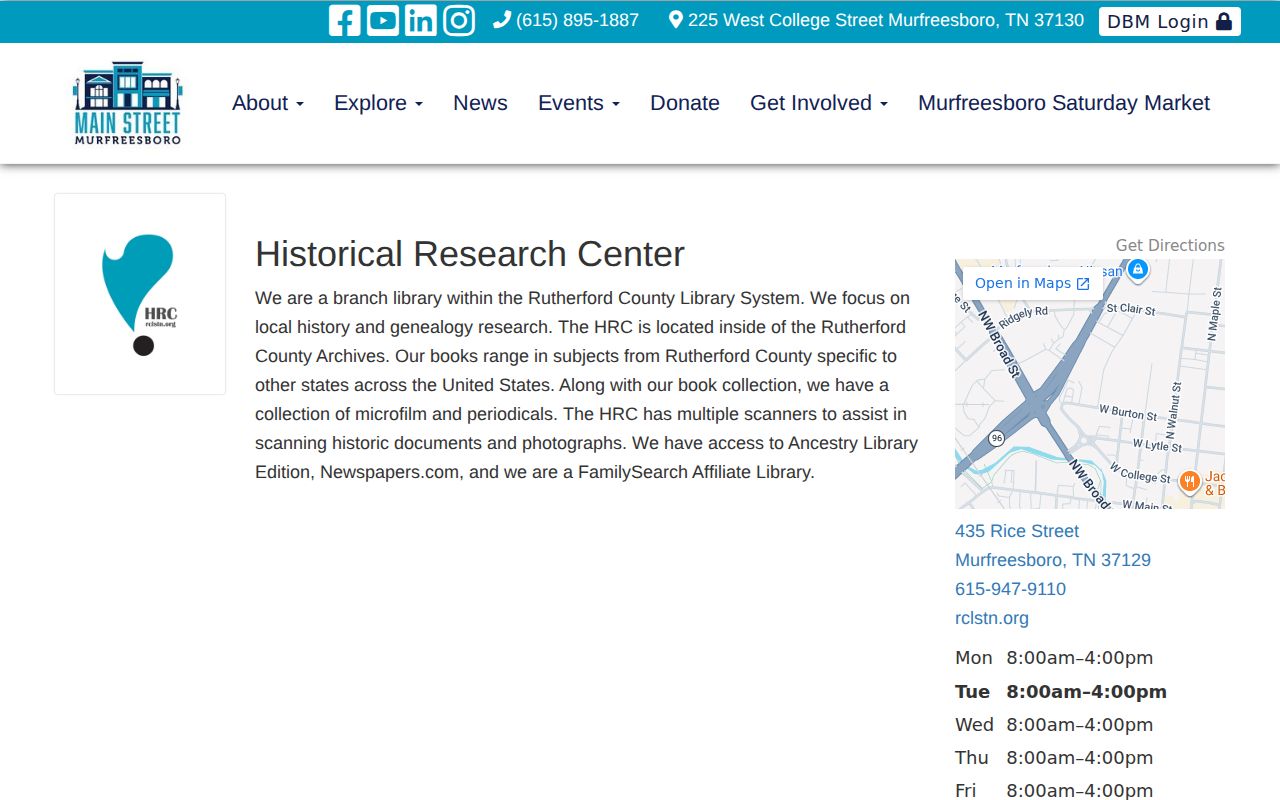
The physical location at 435 Rice Street explains why a Smyrna city directory search may lead to Murfreesboro. Collection location changed, but the material remains a Smyrna research resource.
Smyrna City Directory Newspaper Substitutes
Newspapers fill part of the gap between cataloged directory years. Rutherford Archives holds the Daily News Journal in bound or microfilm form from 1931 through 1992. A notice can preserve an address transition, family relationship, civic event, road reference, or business name that never appears in an assessor record. It is a dated clue, so compare it with a deed, tax record, probate file, or directory scan before treating it as settled fact.
The Rutherford Archives online-resources page also identifies historical birth, death, marriage, will, tax, court, and chancery indexes. Old Smyrna Courier digitization and transfer work is documented in RCLS materials, but the exact available issue range was not stated. Ask at the HRC or Archives before assuming that a particular Courier date can be read online.
For community photographs, publications, and place material, the Rutherford County Historical Society digital collections add a second local route. The society is volunteer-run and growing, so search results and coverage should be checked directly.
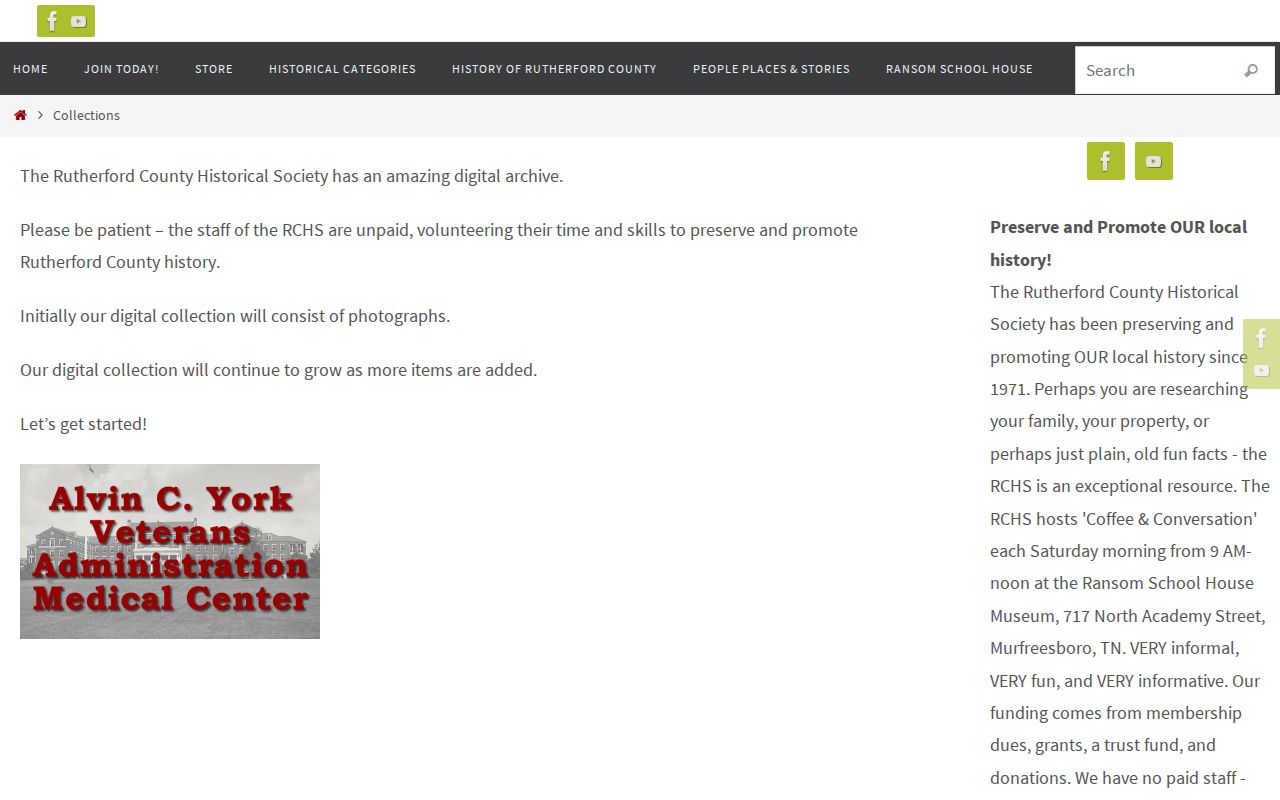
The Historical Society collection is a useful companion to a city directory search because it can preserve local context that a listing leaves out. It is not evidence that every Smyrna household has been indexed.
Smyrna City Directory Entries Need Local Scans
No actual Smyrna or Murfreesboro directory page was opened during the source review. The following is therefore an expected entry inventory from the Library of Congress city-directory guidance and standard directory structure. Every field must be confirmed against a local scan before it is described as a feature of a Smyrna or nearby volume. A page image can also reveal the abbreviation key, publication year, and whether the book is alphabetic or address ordered.
| Name | Expected surname and given-name entry; spelling and initials need scan confirmation. |
|---|---|
| Spouse or relation | Possible parenthetical or widow notation, if printed in the particular volume. |
| Occupation or affiliation | Possible historical identifier; its presence and wording need local scan confirmation. |
| Street address | Possible residence or business address, not an undated location claim. |
| Owner or household notation | Possible mark or classification only if the local volume actually prints one. |
| Telephone or address classification | Possible format detail that must be checked in the volume. |
- Criss-cross directory
- An address-ordered section that groups entries by street. No verified local run or publisher was located for Smyrna.
- Householder index
- An index that identifies the household entry or head, if the publication supplies one.
- Abbreviation key
- The volume’s explanation of its short forms and symbols. Photograph or transcribe it before interpreting an entry.
- Index versus page image
- An index helps locate a name; the page image preserves the wording, year, and nearby context needed for verification.
The Library of Congress city-directory guide provides the general research method shown below. It supports a careful search strategy, while the missing local page image remains a fact to disclose.
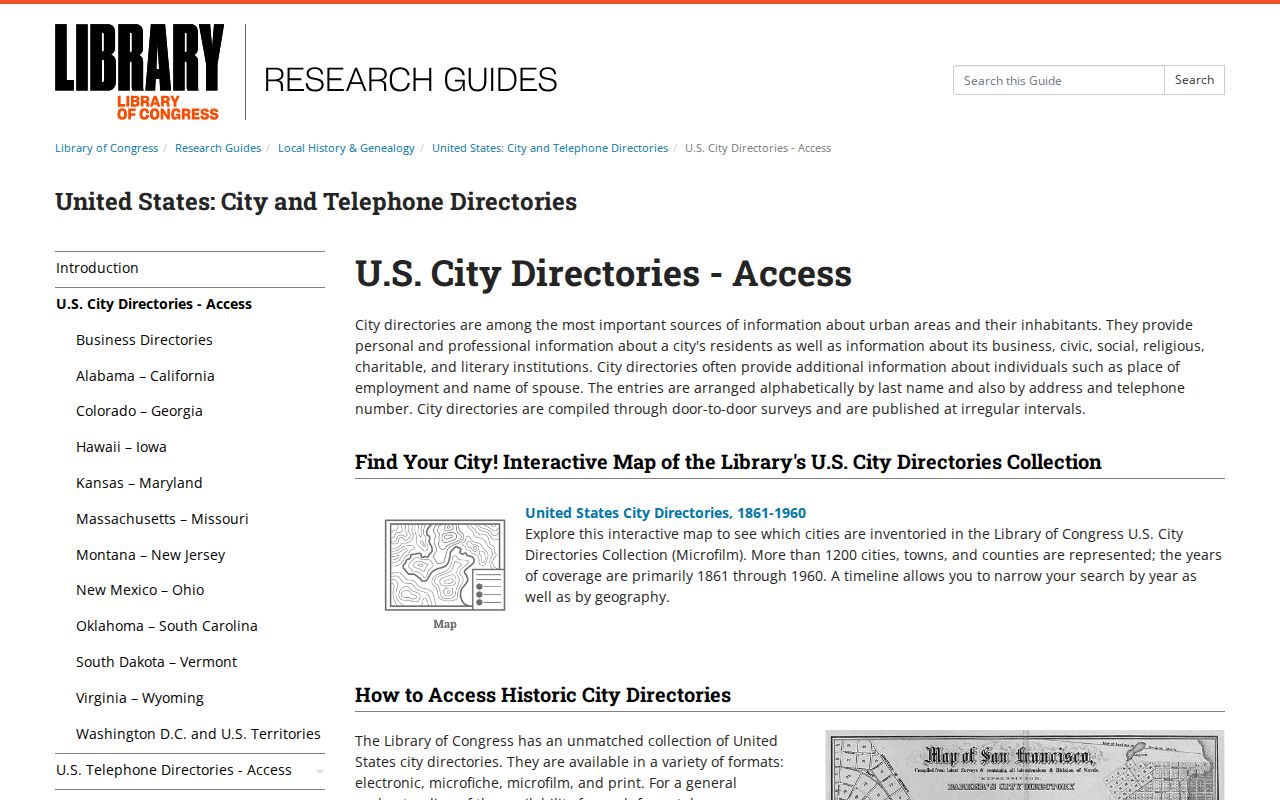
A local scan is the point at which expected fields become documented fields. Until then, record only the repository, title, year, and search result without filling gaps from a generic directory model.
Trace a Smyrna City Directory Household
Use one dated reference at a time. A directory entry can suggest a street or relationship, but it can lag a move, omit a person, or rely on an abbreviation that changes from book to book. Census schedules provide a household snapshot. Directories, when confirmed, help fill the years between those snapshots. Newspapers, deeds, tax rolls, and probate records are then checks on the same family and place.
- Start with a known surname, address, or family connection and note the exact year being tested.
- Ask the repository for a local or nearby city directory by title and year. Capture the title page, abbreviation key, and entry page if a match is found.
- Record spelling variants, initials, spouse or relation notation, address, and every printed historical identifier. Do not silently modernize an old street name.
- Pair each confirmed directory year with the closest released census year. Compare the street, household composition, and age-appropriate names rather than relying on one spelling.
- Use dated newspapers, tax records, deeds, probate, or the marriage and will indexes at Rutherford Archives to test a move, death, transfer, or family relationship.
A name disappearing from a directory can mean a move, death, an unlisted telephone, a changed spelling, or a changed publication practice. The responsible next step is another dated source. For an heir or family-relationship question, probate and certified records are stronger confirmation channels than inference from a directory line.
Note: Record the year, title, page, and repository with every entry so a later researcher can repeat the check.
Smyrna Before Street Addresses
The 1878 D. G. Beers Rutherford County map supplies a pre-modern directory layer. Its Smyrna inset includes roads, railroads, tract lines and numbers, named landowners, and a population table. It predates many current street-number and parcel assumptions. A deed surname can sometimes be tested against the tract names, then carried forward through tax records and deed abstracts.
Use the map for historical geography, not as a present-day address locator. Match the landowner name, road, tract context, and time period before connecting it to a later parcel. The 1878 map becomes especially useful when a family record gives a place name but no modern house number.
Smyrna Library History and Records
Smyrna’s library history explains why local research may not be stored where a visitor expects. The branch opened on October 17, 1960 in two rooms of a local residence. A 22,500-square-foot facility opened on November 8, 1999, and WebCat followed later that month. The subsequent Walkup transfer to HRC reflects a preservation route for local history and genealogy material.
- 1960: The Smyrna branch opened in two rooms of a local residence.
- 1999: A 22,500-square-foot library facility opened, followed later that month by WebCat.
- 2024–2026: Walkup and Courier collection work documented the transfer of local-history material to the Historical Research Center.
- 2026: RCLS announced a Tennessee America 250 grant for the Smyrna Public Library “Walking Through History” event.
The Rutherford County Library System history records those branch milestones. RCLS also announced a $25,000 Tennessee America 250 grant for “Walking Through History,” a free August 1, 2026 Smyrna Public Library event. That current local-history effort is a useful reason to contact the library or HRC for collection guidance, not evidence of a new directory run.
Ask whether a specific directory, newspaper, or family file is held at the Smyrna branch, HRC, Archives, or an affiliate service. The answer can vary by collection and access date.
Smyrna City Directory Access Route
Begin with the Historical Research Center at 435 Rice Street for the Walkup files, local reference material, microfilm, and database access. Rutherford Archives is the next county repository for indexes, tax records, maps, court material, and the Daily News Journal. The Rutherford County Historical Society and its MTSU collection add publications, photographs, and county history. Tennessee State Library and Archives is the state-level route for microfilmed deeds and city-directory material.
Bring a surname, date range, possible street, and known variant spelling. Ask whether a collection is viewable on site, on microfilm, through a library terminal, or only by staff request. If a claimed Smyrna city directory cannot be produced or cataloged, leave the claim unmade and proceed with the documented companion sources instead.